Tuesday, November 29, 2011

Electronic Recycler Metech: Two Different Articles, Two Different Frames


image retrieved from metechrecycling.com

Two articles from The Denver Post, published nearly two years apart, offer very different frames in their coverage of Metech Recycling, an urban mining company.

Metech takes unwanted computers, televisions, and other electronic devices, disassembles them, and salvages materials such as aluminum, copper, and even small amounts of gold. In addition to their Denver plant, the company also has plants in other states such as California and Massachusetts.

A Jan. 2010 article by Jordan Steffen, takes an environmental approach and frames Metech as a company that is striving to keep harmful materials out of our landfills, “Once a television or other electronic device is unplugged and dumped, it can turn into a toxic hazard filled with materials such as lead, mercury and arsenic.”

The company is cited for its positive impact on the environment. The article also speaks to the potential hazards of dumping electronics in the garbage, “There has been growing concern among state and federal environmental agencies about those old TVs, monitors and gadgets because they pose a contamination threat to soil and groundwater.”

So the frame of the article is largely based on environmental impacts: keeping harmful materials out of landfills and groundwater, and less mining for new materials. In addition, Steffen notes that, at the time of the article, 50%-70% of electronics that are collected for recycling in the US, end up being shipped overseas into low income parts of foreign countries, where they don’t have the safety tools and equipment to safely handle materials such as mercury and lead. Steffen alludes to the e-waste problem that still plagues a lot of foreign communities.

video by CBS News

But a more recent Denver Post article by Bruce Finley, frames Metech a little differently. He also acknowledges Metech’s environmental responsibility but instead focuses on the strong financial potential in the business of recycling electronics.

“The disassembly-line workers hammering, drilling, snipping and shredding in a north Denver warehouse each morning are pioneers in new urban mining. End product: gold, silver, copper, aluminum,” Finley writes.
He also cites the greater difficulties of mining the earth for new materials in comparison to the more financially feasible process of recycling electronic components. He quotes EPA’s regional administrator Jim Martin as saying, “Building a mine these days is a process that takes years, a process that requires us to build in all kinds of safeguards to make sure we're protecting water and air quality. This is far cheaper, faster and easier."

Finley’s article also points out how recycling in controlled environments such as Metech has benefits for the workers performing the actual labor. “Traditional mining to extract minerals from deep underground pays as little as $35 a month and releases toxic pollution that poisons people, said Noah Amoah, 42, referring to gold mines in his native Ghana.”

Finley also stresses the jobs being created and sustained as a result of Metech

“Over two years, jobs have grown here and at 30 other certified "e-steward" plants nationwide.”
Economics is stressed more than environmentalism.

What does this shift in tone between the two articles imply? Perhaps it shows how just 2 years ago, it was still a bit of a struggle to convince people that recycling their unwanted electronics was necessary. In the time, since then, maybe urban mining has become more accepted as a worthwhile goal.


Beyond the scope of these two Denver Post articles, it seems there are more stories that future journalists can expand upon. Finley briefly mentions that currently there are no US smelting plants that can process the aluminum, and gold that companies like Metech salvage from old electronics.

“No major metal smelters are available in the U.S. because of environmental controls. Smelting companies in Canada, Denmark and Japan capture that part of the growing business,” Finley writes.

Articles that probe further into the smelting industry, which is getting increased business from companies like Metech, might be of interest since there are both environmental and monetary implications.

Used Soap: Dodging Pitfalls of Sensationalism Allows for Credibility


image retrieved from worldvisionreport.org

How does the prospect of going into hotels and recycling those used bars of soap and half-empty, little bottles of shampoo strike you?

The images evoked might naturally make one squeamish.

But an article by The Los Angeles Times writer Susan Carpenter does a good job at not taking the bait by making the topic overly sensational.

Exploiting the unease and other mixed feelings that readers must initially have about reusing old toiletries would’ve been an easy way to inflate readership, but would have undermined the importance of Laguna Beach becoming the first US city to make all its hotels join in the recycling program.

Carpenter could have exercised graphic and verbose writing, but instead employs a reserved style that allows the implications of reducing hotel waste resonate.

Consider this point by Carpenter, “In an average year, with an estimated 75% occupancy rate, Laguna Beach hotels generate 336,000 bars of soap and a slightly lesser number of shampoo, conditioner, bath gel and lotion bottles, all of which were previously thrown in the trash.”

All of a sudden, gross images dissipate and we are made aware of a wasteful problem being corrected. That is the strength of this article.

Carpenter also does a good job of widening her scope beyond that of Laguna Beach. She cites the Clean the World non-profit that has tasked itself with recruiting prominent hotels to engage in this recycling program.

image retrieved from cleantheworld.org


She counters our fears of simply taking bars of soap from the garbage and handing it to someone else to use, “The bars of soap are cleaned of hair and paper, sterilized, ground into pellets and pressed into new bars of soap that are distributed to non-governmental organizations in 45 countries that do not have ready access to soap.”

The impetus of the recycling is not just to save money, or take weight off landfills, but is also to make a difference in foreign communities where poor hygiene leads to health crises.
According to a source in the article, Clean the World co-founder Shawn Seipler, “The main killers of children in less-developed parts of the world are pneumonia and diarrhea -- diseases that could be reduced as much as 60% with simple hand-washing.”
Now the idea of saving those soaps and shampoos from our hotel rooms doesn’t seem so skin-crawling.
The only fault that could possibly be lodged against the article is that the implication of helping the quality of these low-economic communities is not eluded to until very late in the article. By the last couple of paragraphs many people may have stopped reading and thus are not aware of this important benefit.

image retrieved from cleantheworld.org
Also, perhaps Carpenter could have gone into more detail about which countries will be the recipients of this program. Clean the World’s website shows that the recycled products make it countires all over the world, such as Haiti, India, and Kenya to name a few.
Regardless of these minor qualms, Carpenter’s article is a very good example of environmental and recycling reporting that lends credibility to environmental causes.
But perhaps her best stroke was the way she avoided gimmicky ways of nabbing readers, by sensationalizing and playing to our initial reservations.
To better understand what Carpenter accomplished, it may be useful to see an article that does commit these fouls. Here’s an AP article by Arthur Max about crematoria in the Netherlands that recycle implants and prosthetics of the deceased.

Monday, November 7, 2011

Wastewater to Drinking Water: Discovery News Muddles the Issue

image retrived from rainwater-harvesting-4-homes.com

A recent article by Irene Klotz from Discovery News does very little to allay fears of using treated wastewater to replenish drinking water supplies. Instead, she seems to exploit the public’s unease about this idea to cheaply grab attention, only to fail to supply her readers with any pertinent information. In this way, it serves as an example of inadequate reporting on a scientific subject.

Consider her headline, “Texas Town to Recycle Urine.” It conjures up vivid and unpleasant images that makes one want to read more. But it is misleading because it implies that this town is only treating the urine and not the other water in the plumbing. Also, it neglects the fact that wastewater, through numerous treatment processes (such as these employed in Boulder, Colorado), ending up in drinking water reservoirs is not entirely uncommon. This New York Times article, by Randal Archibold, notes that treated wastewater has been discharged for years into bodies of water like the Mississippi and Colorado rivers—sources of drinking water for millions of Americans.

image retrieved from discovery.com

The use of images in this article continues the pandering to the fears of the average reader. Has a toilet ever looked this ominous? The caption under it downplays the notion that we are drinking toilet water, but the message the article sends is easily lost. At worst, people won’t even read the caption and therefore might assume this article is against adding treated wastewater to potable water supplies. At best, the reader does read the caption and is confused by the contradiction between image and text, and comes away no clearer on the article’s message.

If it was the intent of Klotz to genuinely cast doubt on the benefits of blending treated wastewater with drinking water, why not bring up more credible concerns such as the increased exposure to potentially harmful byproducts of chlorination (which are succinctly explained by the Minnesota Department of Health website)?

Also take notice of how there is hardly any scientific support on the treatment practices Big Spring, Texas intends to employ. Klotz cites John Grant, a district manager, as saying, “We're taking treated effluent (wastewater), normally discharged into a creek, and blending it with (traditionally supplied potable) water.” This is supplemented by another vague comment, “In essence, the system speeds up what would naturally occur with the flow of discharged water through wetlands, with more pristine results.” How does eliminating a whole level of filtration provide more “pristine” results? This could be a glaring question for the readers, who are probably comprised of people ignorant to the science of wastewater treatment. Again, the article seems to shroud the topic in confusion when it should be clarifying it.

image retrieved from bouldercolorado.gov

In lieu of elaboration, Klotz just jumps to different topics. She includes as much attention to Texas drought statistics as she does to the science involved in wastewater treatment. Also, she curiously mentions a NASA program where a toilet on the International Space Station filters urine to recover water which can be used for drinking, cooking, and other uses. What purpose does this factoid serve? It doesn’t seem to have any relevant bearing on what is going on in Big Spring, Texas. Klotz continues to evoke sensational anecdotes without providing any relevant context to link it to the topic at hand.

In this article we can sense the detriments to sacrificing in-depth, relevant reporting for attention grabbing. The readers come away with little to no knowledge of the science behind wastewater treatment then they possessed before. The message becomes unclear—is treated wastewater a good or bad thing to add to drinking water? The words vaguely seem to support what this Texas town is doing, but the images and headline play to common trepidations. It is another example of media pressing buttons to get our attention and then failing to report anything substantial that could enlighten us.

Tuesday, November 1, 2011

Hybrid Cars On The Road Not Enough

image retrieved from ecarvehicles.com

An article by James Kanter of the International Herald Tribune, the New York Times’ international edition, stands out as an example of very good reporting on a topic that does not receive much news coverage—hybrid car batteries. But instead of touting fuel-efficiencies, Kanter’s vision extends into the future and asks how the auto industry is preparing to handle these batteries once they expire. The article also does a good job at looking beyond the impact of one group—the automakers—and investigates how their decisions will impact companies involved in urban mining. In addition to this, Kanter does some extensive investigating and provides the reader with a global snapshot detailing the recycling practices of many automakers spanning several countries. All these qualities make for an in-depth, knowledgeable piece of reporting that can be hard to find in many news outlets.

The difference in reporting between this article and others on the topic of hybrid cars is established in the first couple of paragraphs:
With fleets of electric cars starting to hit the roads, the next mother lode for salvage companies is expected to be the expensive, newfangled batteries powering them.
Yet even as automakers extol the ways these cars can benefit the environment, they are divided over how best to handle the refuse: recycle or repurpose.”
Kanter implies that getting hybrid cars on the road is good, but is not the only step.
Whereas many other articles, like this one from the NY Daily, focus on immediate impacts such as how fuel-efficient hybrid cars are, Kanter looks toward future impacts. He notes that while the surge of hybrid-car sales will spur business for companies tasked with handling the discharged batteries, the disagreement among automakers about how to best reuse them could create problems for these companies as they attempt to expand.

Kanter cites a manager of one of these companies, who sheds light on the forseeable difficulties, “Companies that do not plan for recycling face ''brand damage'' at the least, he said, and the possibility of fines and legal action if the batteries were illegally incinerated or dumped in landfills.”

image retrieved from greenliving.lovetoknow.com


But Kanter also acknowledges the importance of laws against companies dumping these batteries, especially when it costs more to recycle them than to mine fresh resources and make brand new ones.

With these concerns in mind, Kanter then shifts his focus to the practices some automakers have decided to exercise in regards to the batteries. Recycling involves breaking down and separating the materials in the batteries, and perhaps reusing them to possibly create new ones. Other automakers are leaning towards keeping the old batteries intact, which still have some latent power, and using them in another way entirely. Kanter does not focus on just one manufacturer or country but supplies the reader with many cases.

Manufacturers like Honda and Toyota have recycling plans in place. According to the article, Toyota “began shipping some batteries from Prius models sold in the United States to Japan to take advantage of a more efficient recycling process there.”
Kanter discovers that other automakers like General Motors and Nissan are leaning towards repurposing their batteries, “They have agreements with power companies to develop ways to reuse old batteries, perhaps for storing wind or solar energy during peak generating times for later use.
Kanter then goes on to report the viewpoints that different countries embrace.
He notes that, ”In the United States, the Energy Department has granted $9.5 million to Toxco to build a specialized recycling plant in Ohio for electric vehicle batteries. It is expected to begin operation next year, handling batteries from a variety of makes and models.”

image retrieved from Reuters/Issei Kato

And in Japan, repurposing plans are in place, “Nissan has formed a venture called 4R Energy with Sumitomo, a Japanese conglomerate, aimed at using the old batteries for storing energy from renewable energy sources like wind and solar and for backup power supplies in emergencies.”
Kanter’s coverage of the varying recycling practices of many automakers in many different countries, does a good job of providing the reader an accurate snapshot of the current landscape. And because many automakers and more than one urban mining company are covered, the whole article feels much more informed and relevant. It is a rare piece of reporting that is concerned more about future developments and solutions than the mere benefits of the present. The article also contains an implicit message that we need to ensure our dependency on oil is not simply traded for a dependency for lithium and other materials.

Do you think this is a standout piece of reporting, or do you believe this level is commonly achieved?

Is there a different angle you think Kanter should have covered?

Thursday, October 6, 2011

Cedar Grove: Composting Backlash

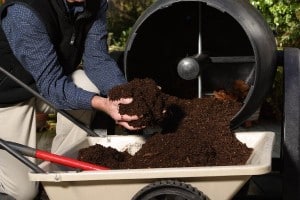
image retrieved from http://www.cedar-grove.com/

Going green is good and all, but at what cost? That seems to be a general theme around the media coverage of Cedar Grove Composting and the odors associated with their two Washington state facilities. The reporting is fairly scrupulous and informative, but there is much more weight given to the conflict between the parties than to the positive effects that the composting has had. This unequal attention, while interesting to the average uninformed reader, could cast doubt on the viability of recycling programs such as composting.

Consider this Associated Press article by Phuong Le. The first paragraph notes that 90,000 tons of Seattle’s food waste was diverted from landfills thanks to Cedar Grove. But that is the last mention of a positive impact on the environment unless it is coupled with controversy, such as this quote the article includes, "They reduce our garbage rate because of all the organics they take out of the stream," said state Rep. Hans Dunshee, D-Snohomish. "On the other side, we can’t have overwhelming smell driving people out of their houses."

The rest of the article is devoted to the back and forth arguments between Cedar Grove and the neighboring communities. Cedar Grove has fought many of the complaints and fines on the basis of unproven odor trails and the fact that they have spent millions in odor prevention. The opposing side, comprised of residential home owners and the mayor of Marysville, claim Cedar Grove is shirking responsibility and needs to do more.

The sensationalism Le gives to the schism ("A community group calling itself "Citizens for a Smell Free Snohomish County" is also raising a stink.") could have the negative impact of implying there is a larger schism between benefits and detriments to composting, and recycling programs in general.

A Seattle-Times article by Keith Ervin closely resembles the outline of the AP reporting. In its introduction it notes, "Cedar Grove Composting’s plants in Maple Valley and Everett have been hugely successful in diverting 344,000 tons of waste a year from landfills and turning it into a popular gardening product."

But like the AP reporting, this is about all we get in terms of positive environmental impact from composting. There is no mention of how much methane emissions are reduced by composting food scraps as opposed to burying them in landfills. And the benefits of recycling organic compounds back into the soil are glossed over.

image retrieved from http://www.gardeningchannel.com/

It is pretty easy to question the viability of composting when the lion’s share of attention is about how many odor complaints the company has received or how many thousands of dollars they have been fined.

However, one thing this Seattle-Times article does better than the AP is it looks into possible outcomes of this problem, such as the installation of more advanced composting equipment or the prospect of moving the facility to a more remote site.

There is a little coverage of this story in local television news, but not much. This segment from Q13 Fox News feels very sparse. We know of television’s constraints such as little space and time available, but this reporting lacks any visual impact—television’s strong suit.

 
video retrieved from http://www.q13.com/

None of this reporting cited can be considered as bad in itself. The information is accurate and both sides of the odor debate are given about equal representation. But it’s the framing that gives rise to the shortcomings of this coverage. Controversy is a major attraction of readers. Can we really expect a reporter under deadline and with the burden of attracting the average person to embark on a scientific investigation? Is it that surprising that media, who are tasked with increasing readership and therefore ad revenue, would exploit controversy?

Whatever the answer, the potentially negative impact of this coverage remains. Are the uninformed readers of these articles going to question the validity of recycling food waste? Or is this story easily dismissed as the failings of one particular company and is not emblematic of an entire industry?